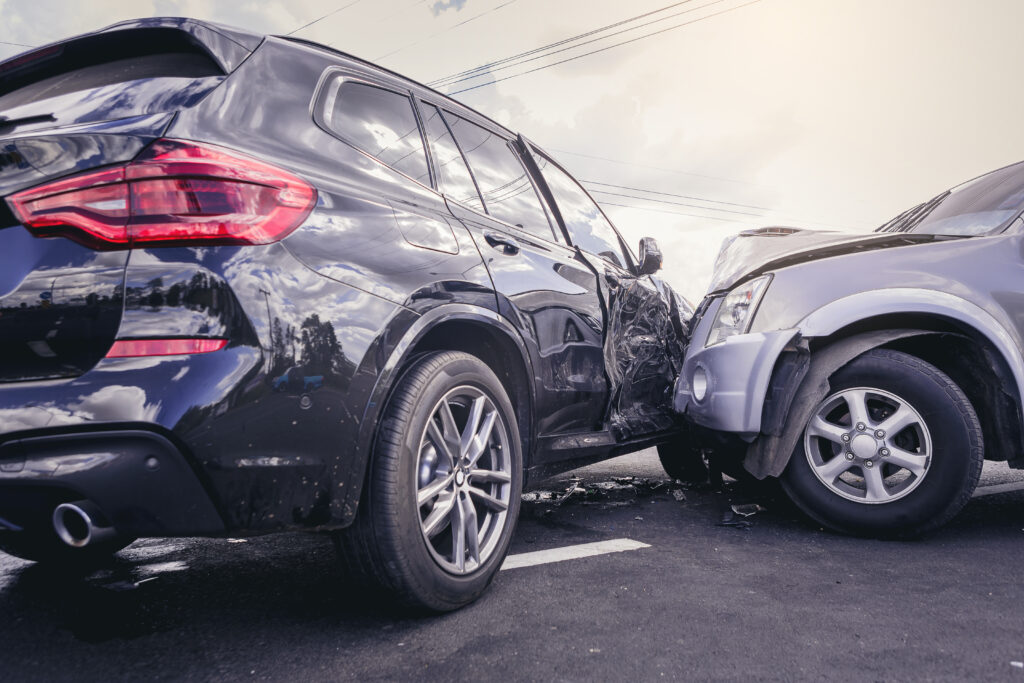
T-bone accidents, also called side-impact collisions, occur when the front of one vehicle strikes the side of another, creating a “T” shape. These devastating crashes typically happen at intersections and account for approximately 13% of all traffic accidents in California, resulting in 295 fatalities annually according to state data. Understanding liability in these cases is crucial because determining fault directly impacts your ability to recover compensation for injuries, medical bills, and property damage.
California operates under a pure comparative negligence system, which means fault can be divided between drivers based on their actions leading up to the collision. Unlike some states that bar recovery if you’re more than 50% at fault, California allows you to recover compensation even if you’re 99% responsible – though your settlement will be reduced by your percentage of fault. Most T-bone accidents involve clear liability factors like running red lights, failing to yield right-of-way, or making illegal left turns, but complex scenarios can arise when both drivers share responsibility.
The key to successful T-bone accident claims lies in understanding California’s specific traffic laws, gathering proper evidence, and knowing how insurance companies determine fault. Whether you’re dealing with a straightforward red light violation or a disputed right-of-way situation, knowing your rights under California law can mean the difference between a fair settlement and walking away empty-handed.
How California Determines Fault in T-Bone Accidents
California courts and insurance companies use a systematic approach to determine fault in T-bone collisions, focusing on which driver violated traffic laws or failed to exercise reasonable care. The state’s pure comparative negligence rule allows fault to be divided between multiple parties, with each driver’s compensation reduced by their percentage of responsibility.
California’s Pure Comparative Negligence Rule
Under California’s pure comparative negligence system, you can recover damages even if you’re primarily at fault for the accident. For example, if you’re found 30% responsible for a T-bone collision and your total damages are $100,000, you would receive $70,000 in compensation. This differs from modified comparative negligence states where being 51% or more at fault bars any recovery.
The court or insurance adjusters determine fault percentages based on each driver’s actions, traffic violations, and adherence to right-of-way rules. Common fault divisions in T-bone cases might include 90% fault to a red light runner versus 10% to a driver who was speeding, or 70% fault to someone making an illegal left turn versus 30% to a driver who failed to maintain proper lookout.
Primary Liability Factors in T-Bone Collisions
Several key factors influence fault determination in T-bone accidents. Traffic violations carry significant weight – running red lights, failing to stop at stop signs, or making illegal turns typically result in primary liability. Right-of-way violations are equally important, as California Vehicle Code clearly establishes which driver should yield in various intersection scenarios.
Speed also affects liability calculations. While one driver may have had the right-of-way, excessive speed can increase their fault percentage if it contributed to the collision’s severity or prevented them from avoiding the crash. Distracted driving, including cell phone use, impairment, and failure to maintain proper lookout, can shift fault percentages significantly even when the other driver committed a traffic violation.
Right-of-Way Violations That Cause T-Bone Accidents
California’s intersection laws clearly define which drivers must yield right-of-way, making many T-bone accident liability determinations straightforward. Understanding these rules helps establish fault and strengthens your injury claim.
Running Red Lights and Stop Sign Violations
California Vehicle Code Section 21453 requires drivers to stop at red lights and remain stopped until the signal turns green. Drivers who run red lights and cause T-bone accidents typically bear 90-100% liability, as this represents a clear violation of traffic laws. The violation alone establishes negligence per se, meaning the driver is automatically considered negligent for breaking the law.
Red light violations carry additional consequences beyond accident liability. Drivers face fines ranging from $35 to over $100 plus court costs, and receive one point on their DMV record. These citations serve as powerful evidence in personal injury claims, though fault can still be shared if the other driver was also negligent.
Stop sign violations follow similar liability principles. California Vehicle Code Section 21800 requires complete stops at stop signs before proceeding when safe. Rolling stops or failing to stop entirely that result in T-bone collisions typically assign primary fault to the violating driver.
Failure to Yield at Intersections
Vehicle Code Section 21800(a) requires drivers entering intersections to yield to vehicles already lawfully in the intersection. This creates liability when drivers pull into intersections without ensuring they have adequate time and space to complete their maneuver safely. At uncontrolled intersections, the driver on the right has right-of-way, while drivers making left turns must yield to oncoming traffic.
Four-way stop intersections follow first-to-arrive rules, with the driver reaching the intersection first having right-of-way. When vehicles arrive simultaneously, the driver on the right proceeds first. Violations of these rules that cause T-bone accidents typically result in primary liability for the yielding driver.
Left Turn Liability and Right-of-Way Rules
Left-turning drivers face special liability considerations under California law. Vehicle Code Section 21801 requires left-turning drivers to yield to oncoming traffic unless they have a protected green arrow. This creates a presumption of fault when left-turning drivers cause T-bone accidents with oncoming vehicles.
However, liability isn’t always clear-cut. Oncoming drivers who speed excessively, run red lights, or fail to maintain proper lookout may share fault. At Hales & Associates, we commonly see cases where left-turning drivers bear 70-80% fault while oncoming drivers receive 20-30% fault for contributing factors like speeding or distraction.
Proving Liability in California T-Bone Accidents
Successfully proving fault in T-bone accidents requires systematic evidence collection and understanding how different types of proof influence liability determinations. Strong evidence can mean the difference between recovering full compensation and facing disputed liability claims.
Police Reports and Traffic Citations
Police reports provide crucial initial fault determinations, though they’re not automatically admissible in court. Officers analyze physical evidence, interview witnesses, and review traffic laws to assign preliminary fault. When police issue citations for traffic violations like running red lights or failing to yield, these create strong evidence of negligence.
However, police reports aren’t always accurate or complete. Officers may arrive after the accident and rely on conflicting driver statements. Insurance companies and attorneys often conduct independent investigations to verify or challenge police fault determinations, especially in complex scenarios where both drivers claim they had the right-of-way.
Witness Statements and Testimony
Independent witnesses provide invaluable evidence in T-bone accident cases, especially when drivers give conflicting accounts. Witnesses can confirm traffic signal colors, vehicle speeds, and driver behavior leading up to the collision. Their statements carry particular weight because they have no financial interest in the case outcome.
Securing witness statements quickly is crucial, as memories fade and contact information can be lost. Quality witness testimony often focuses on specific details: which light was red or green, whether a driver stopped at a stop sign, or if someone was using a cell phone. These details help establish clear fault patterns and strengthen settlement negotiations.
Physical Evidence and Accident Reconstruction
Vehicle damage patterns tell the story of how T-bone accidents occurred. The point of impact, damage severity, and vehicle final positions help accident reconstruction experts determine speeds, angles, and which driver violated traffic laws. Skid marks, debris patterns, and property damage provide additional evidence of fault.
Modern vehicles often contain electronic data recorders that capture speed, braking, and steering inputs before crashes. This data can prove whether drivers attempted to stop or avoid the collision, supporting or contradicting their accounts of events. Traffic cameras, nearby security footage, and cell phone records also provide objective evidence of fault.
Common T-Bone Accident Scenarios and Fault Assignment
Understanding typical T-bone accident scenarios helps predict how fault will be assigned and what evidence will be most important for your case. Each scenario presents different liability considerations and potential settlement outcomes.
Red Light Runner vs Right-of-Way Driver
The most straightforward T-bone scenario involves a driver running a red light and striking a vehicle proceeding legally through the intersection. These cases typically result in 90-100% fault assignment to the red light runner, as the violation clearly establishes negligence. However, the right-of-way driver may share minor fault if they were speeding significantly or failed to exercise reasonable care.
Settlement values in clear liability red light cases tend to be higher because fault is rarely disputed. Insurance companies recognize their insured’s liability and focus negotiations on damages rather than fault percentages. This allows injured parties to concentrate on medical treatment and recovery rather than lengthy liability disputes.
Left Turn Accidents at Busy Intersections
Left turn T-bone accidents present more complex liability scenarios. While left-turning drivers typically bear primary responsibility for yielding to oncoming traffic, fault percentages can vary based on specific circumstances. Yellow light timing, intersection visibility, and oncoming vehicle speeds all influence fault determinations.
Common fault divisions in left turn cases range from 70-90% for the turning driver and 10-30% for the oncoming driver. Factors that increase the oncoming driver’s fault include excessive speed, running a red light, or distracted driving. Weather conditions, construction zones, and defective traffic signals can also affect liability calculations.
When Both Drivers Claim They Had Green Light
Disputed traffic signal cases require extensive investigation to determine fault. Both drivers claiming green lights suggests either signal malfunction, one driver’s mistaken recollection, or one driver running a red light. Resolving these disputes often requires traffic engineering analysis, witness testimony, and signal timing records.
These complex cases may result in 50-50 fault divisions when evidence doesn’t clearly establish which driver had the right-of-way. However, thorough investigation often reveals supporting evidence like witness statements, traffic camera footage, or damage patterns that clarify which driver violated traffic laws.
T-Bone Accident Settlement Amounts in California
T-bone accident settlements vary dramatically based on injury severity, fault percentages, and available insurance coverage. Understanding typical settlement ranges helps set realistic expectations and evaluate settlement offers.
Settlement Ranges by Injury Severity
Minor injury T-bone accidents with soft tissue damage, minor cuts, or brief medical treatment typically settle between $5,000 and $50,000. These cases involve emergency room visits, short-term physical therapy, and temporary work disruption but no permanent injuries or extensive treatment.
Serious injury cases involving broken bones, herniated discs, or surgeries generally settle between $50,000 and $300,000. These settlements account for multiple surgeries, extended physical therapy, permanent impairment, and significant lost wages. Catastrophic injuries like traumatic brain injuries, spinal cord damage, or wrongful death can result in settlements from $500,000 to over $5,000,000.
How Fault Percentage Affects Your Compensation
California’s comparative negligence rule directly reduces your settlement by your fault percentage. If you’re 20% at fault for a T-bone accident and your total damages are $200,000, you would receive $160,000 in compensation. This calculation applies to all damage categories including medical bills, lost wages, and pain and suffering.
Understanding how fault percentages impact settlements helps evaluate whether to accept settlement offers or pursue litigation. Small changes in fault percentages can mean thousands of dollars in compensation differences, making thorough liability investigation crucial for maximizing recovery.
Filing Deadlines and Legal Requirements
California’s strict filing deadlines can bar your right to compensation if missed, making prompt action essential after T-bone accidents. Understanding these requirements protects your legal rights and ensures you don’t forfeit valuable claims.
California’s Two-Year Statute of Limitations
California provides two years from the accident date to file personal injury lawsuits for T-bone accidents. This deadline applies regardless of fault percentages or settlement negotiations with insurance companies. Missing this deadline typically bars any court action, even with strong liability evidence and severe injuries.
The two-year period begins on the accident date, not when injuries are discovered or treatment ends. However, certain exceptions can extend or pause this deadline, including cases involving minors, defendants who leave California, or discovery of fraud. These exceptions are narrow and require legal analysis to determine applicability.
Special Rules for Government Vehicle Accidents
T-bone accidents involving government vehicles face much shorter deadlines. Claims against public entities like cities, counties, or state agencies must be filed within six months of the accident date. This administrative claim requirement must be completed before any lawsuit can be filed in court.
Government claim procedures require specific forms, documentation, and strict adherence to procedural requirements. Failure to properly present government claims within six months typically bars any recovery, regardless of fault or injury severity. These cases require immediate legal attention to preserve your rights.
Working with Insurance Companies After T-Bone Accidents
Insurance companies play a central role in T-bone accident settlements, but their interests don’t always align with yours. Understanding how they investigate fault and evaluate claims helps protect your rights during the claims process.
How Insurance Companies Determine Fault
Insurance adjusters investigate T-bone accidents by reviewing police reports, examining vehicle damage, interviewing involved parties and witnesses, and analyzing medical records. They apply state traffic laws and their company’s fault determination guidelines to assign liability percentages. This process typically takes 30-60 days depending on case complexity.
Adjusters focus on objective evidence like traffic citations, witness statements, and damage patterns rather than driver accounts alone. They may hire accident reconstruction experts for complex cases or when liability is disputed. Understanding this process helps you provide relevant evidence and avoid statements that could increase your fault percentage.
What to Do When Insurance Denies Your Claim
Insurance companies may deny T-bone accident claims for various reasons including coverage disputes, fault disagreements, or policy exclusions. When facing claim denials, you have several options including filing appeals with the insurance company, filing complaints with the California Department of Insurance, or pursuing legal action.
Appeal processes typically require additional evidence, expert opinions, or legal arguments addressing the denial reasons. Many initial denials are overturned on appeal when proper evidence is presented. However, some cases require litigation to achieve fair compensation, especially when insurance companies dispute clear liability or undervalue injuries.
When You Need a California T-Bone Accident Attorney
While minor T-bone accidents with clear liability may be handled independently, many cases benefit from legal representation. Understanding when to hire an attorney can significantly impact your settlement outcome.
Complex Liability Situations Requiring Legal Help
T-bone accidents with disputed fault, multiple vehicles, or government entity involvement typically require attorney representation. Cases involving severe injuries, wrongful death, or insurance coverage disputes also benefit from legal expertise. When insurance companies deny claims or offer inadequate settlements, attorneys can leverage litigation threats to improve offers.
Commercial vehicle T-bone accidents often involve complex liability issues including driver negligence, company responsibility, and multiple insurance policies. These cases require investigation of driver logs, vehicle maintenance records, and company safety policies that individual claimants cannot effectively conduct alone.
How Attorneys Maximize T-Bone Accident Settlements
Personal injury attorneys increase settlement values through thorough investigation, expert witness retention, and aggressive negotiation. They understand insurance company tactics and can counter lowball offers with evidence-based demand packages. Attorneys also handle all communication with insurance companies, protecting clients from making statements that could harm their claims.
At Hales & Associates, we typically see 2-3 times higher settlements when attorneys handle T-bone accident cases compared to self-representation. This increase often exceeds attorney fees, resulting in higher net recovery for injured parties. Legal representation also reduces stress and allows clients to focus on medical treatment and recovery.
Frequently Asked Questions About T-Bone Accident Liability
Who Is at Fault When Both Drivers Had Green Lights?
When both drivers claim green lights, extensive investigation is required to determine fault. This scenario suggests either signal malfunction, mistaken driver recollection, or one driver running a red light. Resolution typically requires witness testimony, traffic camera footage, traffic engineering analysis, and examination of damage patterns to determine which driver actually had right-of-way.
Can I Still Recover Compensation If I’m Partially at Fault?
Yes, California’s pure comparative negligence law allows recovery even when you’re partially at fault. Your compensation is reduced by your fault percentage, but you can still receive damages for the other driver’s negligence. For example, if you’re 30% at fault and have $100,000 in damages, you would receive $70,000 in compensation.
How Long Do I Have to File a T-Bone Accident Lawsuit in California?
California provides two years from the accident date to file personal injury lawsuits for T-bone accidents. Government entity claims must be filed within six months. Missing these deadlines typically bars any recovery, making prompt action essential after serious accidents.
Get Expert Legal Help for Your T-Bone Accident Case
T-bone accidents can result in life-changing injuries and complex liability disputes that require experienced legal guidance. Understanding California’s comparative negligence laws, traffic regulations, and evidence requirements is crucial for maximizing your compensation. Whether you’re dealing with clear liability scenarios or disputed fault situations, having proper legal representation can mean the difference between a fair settlement and inadequate compensation.
At Hales & Associates, our experienced California personal injury attorneys have successfully handled hundreds of T-bone accident cases throughout Los Angeles, Orange County, and San Diego. We understand the unique challenges these cases present and have the resources to conduct thorough investigations, retain expert witnesses, and negotiate aggressively with insurance companies. Our track record includes substantial settlements and verdicts for clients facing everything from minor injuries to wrongful death claims. Contact us today or visit our contact page to schedule your free consultation and learn how we can help you recover the compensation you deserve.