
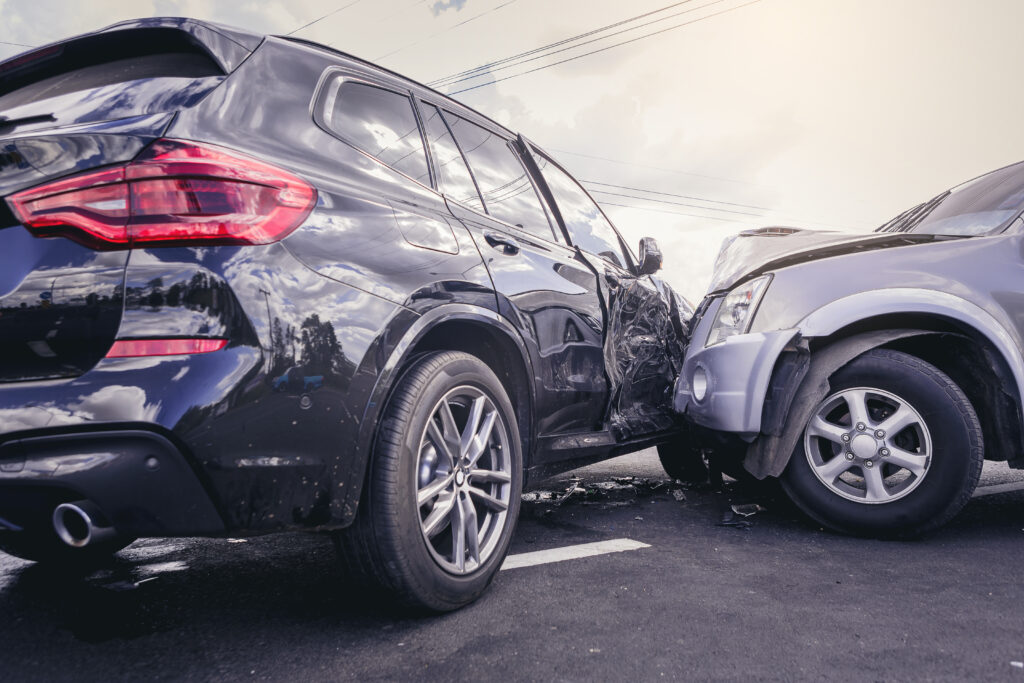
Commercial vehicle accident claims in California are fundamentally different from regular car accident claims due to higher insurance limits, federal regulations, corporate defendants with legal teams, and multiple potentially liable parties. These cases involve vehicles like semi-trucks, delivery vans, Uber/Lyft cars, and company vehicles that typically carry insurance coverage from $750,000 to $5 million or more, compared to California’s minimum $15,000 personal auto coverage.
The complexity of commercial vehicle accident claims stems from federal trucking regulations, state commercial driving laws, vicarious liability rules that hold companies responsible for their drivers’ actions, and the immediate deployment of corporate legal defense teams. Unlike passenger car accidents, commercial vehicle cases require specialized knowledge of Federal Motor Carrier Safety Regulations (FMCSR), evidence preservation protocols, and the ability to investigate multiple defendants including drivers, trucking companies, vehicle owners, and third-party service providers.
Understanding these differences is crucial because commercial defendants begin building their defense immediately after an accident, often sending investigation teams to the scene within hours. At our firm, we recommend that anyone injured in a commercial vehicle accident contact an experienced attorney immediately to protect their rights and preserve critical evidence that can disappear quickly in these complex cases.
What Makes Commercial Vehicle Accident Claims Different?
Commercial vehicle accident claims operate under an entirely different legal framework than typical passenger car accidents, creating both opportunities and challenges for injury victims. The primary distinction lies in the substantially higher insurance coverage requirements, complex regulatory environment, and the corporate nature of most defendants.
Higher Insurance Coverage Limits
Commercial vehicles must carry significantly higher insurance coverage than personal vehicles. Under Federal Motor Carrier Safety Administration (FMCSA) regulations, trucks over 10,000 pounds must maintain minimum liability coverage of $750,000, with many carriers maintaining policies between $1 million and $5 million. Some large trucking companies are self-insured or carry excess umbrella policies exceeding $10 million.
This contrasts sharply with California’s minimum auto insurance requirements of just $15,000 per person for bodily injury. The higher coverage limits mean greater potential compensation for seriously injured victims, but also attract more aggressive defense strategies from insurance companies protecting larger financial exposures.
Multiple Potentially Liable Parties
Commercial vehicle accidents often involve multiple defendants who may share liability for your injuries. Unlike a typical car accident with one at-fault driver, commercial cases can include the driver, trucking company, vehicle owner, leasing company, cargo shipper, maintenance provider, and even vehicle manufacturers. This complexity requires thorough investigation to identify all responsible parties and their insurance coverage.
The doctrine of vicarious liability plays a crucial role in commercial vehicle cases. Under California law, employers are generally liable for their employees’ negligent actions performed within the scope of employment. This means trucking companies can be held responsible for their drivers’ mistakes, even if the company itself did nothing wrong.
Corporate Legal Defense Teams
Commercial defendants deploy experienced legal teams immediately after serious accidents. Insurance companies and trucking corporations understand the potential for large settlements and begin building their defense while victims are still receiving emergency medical treatment. These corporate defendants have resources, experience, and legal strategies specifically designed to minimize their liability and reduce settlement amounts.
Types of Commercial Vehicles Covered Under California Law
Understanding which vehicles qualify as “commercial” is essential for determining applicable laws, insurance requirements, and liability standards. California law broadly defines commercial vehicles as those used in business operations or exceeding certain weight thresholds.
Large Trucks and Semi-Trailers
18-wheelers, semi-trucks, tractor-trailers, and big rigs represent the most heavily regulated category of commercial vehicles. These vehicles fall under federal FMCSA jurisdiction and must comply with extensive safety regulations including hours of service limits, electronic logging device requirements, regular inspections, and strict driver qualification standards. With over 300,000 registered commercial trucks in California, these vehicles present significant risks due to their size and weight, often exceeding 80,000 pounds when fully loaded.
Delivery and Service Vehicles
The explosion of e-commerce has dramatically increased delivery vehicle traffic on California roads. Amazon, FedEx, UPS, and other delivery companies operate fleets of trucks and vans that qualify as commercial vehicles. Additionally, utility trucks, construction vehicles, landscaping trucks, and service vans used for business purposes fall into this category. These vehicles may not require the same federal oversight as large trucks but still carry commercial insurance and create vicarious liability for their operating companies.
Rideshare and Transportation Services
Uber, Lyft, taxi services, and commercial bus operations create unique liability scenarios in California. The classification of rideshare drivers as independent contractors versus employees significantly impacts liability and insurance coverage. California’s AB5 law has added complexity to these determinations, affecting how companies can be held responsible for driver actions. Rideshare companies must provide specific insurance coverage during different phases of operation, from when drivers are logged into the app to when passengers are in the vehicle.
Who Can Be Held Liable in Commercial Vehicle Accidents?
Commercial vehicle accidents often involve multiple parties who may bear responsibility for your injuries. Understanding these potential defendants is crucial for ensuring you pursue all available sources of compensation.
The Commercial Driver
The individual driver can be held personally liable for negligent driving behaviors including speeding, following too closely, distracted driving, driving under the influence, or violating federal hours of service regulations. Commercial drivers are held to higher standards than regular motorists and must maintain commercial driver’s licenses with stricter qualification requirements.
However, commercial drivers often have limited personal assets, making company liability more important for meaningful compensation. Driver negligence also provides the foundation for holding employers liable under vicarious liability principles.
The Trucking or Transportation Company
Under California’s respondeat superior doctrine, employers are liable for employee negligence committed within the scope of employment. This vicarious liability extends beyond the driver’s actions to include company policies, training procedures, hiring practices, and safety culture. Trucking companies can be directly liable for negligent hiring, inadequate training, poor maintenance, unrealistic delivery schedules that encourage speeding, or policies that violate federal safety regulations.
Companies may also face liability for independent contractor relationships. While businesses often classify drivers as independent contractors to limit liability, California courts examine the actual relationship to determine if true vicarious liability exists regardless of contractual labels.
Vehicle Owners and Leasing Companies
When commercial vehicles are owned by parties other than the operating company, separate liability may exist. Leasing companies, equipment rental firms, and independent owners may bear responsibility for vehicle maintenance, safety inspections, or negligent entrustment of vehicles to unqualified drivers.
Third-Party Service Providers
Commercial vehicle operations often involve multiple service providers who may contribute to accidents. Cargo loading companies may improperly secure loads leading to shifting cargo or overweight violations. Maintenance providers may perform inadequate repairs or fail to identify safety issues during required inspections. Vehicle or equipment manufacturers may face product liability claims for defective parts that contribute to accidents.
Federal and California Regulations Affecting Your Claim
Commercial vehicle accidents fall under a complex web of federal and state regulations that can significantly strengthen your claim when violated. Understanding these regulations helps establish negligence and corporate liability.
Federal Motor Carrier Safety Regulations
The Federal Motor Carrier Safety Regulations (FMCSR) under 49 CFR Parts 350-399 establish comprehensive safety requirements for commercial vehicles. Key regulations include hours of service limits preventing driver fatigue, mandatory electronic logging devices (ELDs) tracking driving time, regular vehicle inspections, driver qualification standards, drug and alcohol testing programs, and cargo securement requirements.
Violations of FMCSR create powerful evidence of negligence in accident claims. Studies show that FMCSR violations are found in approximately 88% of truck accident investigations, according to Federal Motor Carrier Safety Administration data. These violations can include driving beyond allowed hours, inadequate vehicle maintenance, unqualified drivers, or failed drug tests.
California Commercial Driving Laws
California Vehicle Code Sections 15200-15302 govern commercial vehicle operations within the state, supplementing federal regulations. State requirements include commercial driver’s license standards, vehicle registration and inspection requirements, weight and size restrictions, and specific traffic laws for commercial vehicles.
California also maintains its own commercial vehicle enforcement programs through the California Highway Patrol and Department of Motor Vehicles, creating additional regulatory compliance obligations beyond federal requirements.
Drug and Alcohol Testing Requirements
Federal regulations mandate comprehensive drug and alcohol testing programs for commercial drivers, including pre-employment testing, random testing, post-accident testing, and return-to-duty testing following violations. Failures in testing programs or positive test results create strong evidence of negligence in accident claims.
Critical Evidence Preservation in Commercial Vehicle Cases
Commercial vehicle accident investigations require immediate action to preserve evidence that corporations routinely destroy in the normal course of business. Unlike passenger car accidents, commercial cases involve extensive electronic data and corporate records that disappear quickly without proper legal intervention.
Electronic Data and Black Box Information
Modern commercial vehicles contain sophisticated electronic systems recording crucial accident data. Engine Control Modules (ECMs) or “black boxes” record vehicle speed, braking, engine performance, and other critical information in the moments before impact. Electronic Logging Devices (ELDs), mandatory since December 2017, track driving hours and vehicle movement data.
GPS tracking systems, fleet management software, and onboard cameras may capture additional evidence of driver behavior, route deviations, or safety violations. This electronic evidence typically gets overwritten within 30-60 days unless specifically preserved through legal action.
Corporate Records and Documentation
Trucking companies maintain extensive records that can prove negligence including driver employment files, training records, safety violation histories, vehicle maintenance logs, inspection reports, drug testing results, and safety meeting documentation. Companies also keep dispatch records, delivery schedules, and communication logs that may show pressure on drivers to violate safety regulations.
Preventing Spoliation of Evidence
California law requires parties to preserve relevant evidence once litigation is reasonably anticipated. Failure to preserve evidence can result in severe sanctions including adverse inference instructions telling juries to assume destroyed evidence was harmful to the defendant’s case. Immediate legal action through litigation hold notices is essential to prevent evidence destruction.
How Much Are Commercial Vehicle Accident Claims Worth?
Commercial vehicle accident settlements typically exceed passenger car accident settlements due to severe injury potential, higher insurance coverage, and corporate liability factors. Understanding valuation factors helps set realistic expectations for your claim.
Factors That Increase Settlement Value
Several factors contribute to higher commercial vehicle settlements. Severe injuries are more common due to size and weight disparities between commercial and passenger vehicles. Federal and state regulatory violations provide strong evidence of negligence. Corporate defendants with substantial insurance coverage and business reputations to protect often prefer settling rather than risking large jury verdicts.
The involvement of corporate defendants also creates potential for punitive damages when companies show willful disregard for safety regulations or public safety.
Types of Damages You Can Recover
Commercial vehicle accident victims can recover economic damages including medical expenses, future medical care, lost wages, reduced earning capacity, and property damage. Non-economic damages cover pain and suffering, emotional distress, loss of enjoyment of life, and permanent disability or disfigurement.
In cases involving egregious corporate conduct, punitive damages may be available to punish defendants and deter similar future behavior.
Why Commercial Cases Settle for More
Average truck accident settlements range from $150,000 to over $1 million according to Insurance Institute for Highway Safety data, significantly higher than typical car accident settlements. The higher values reflect greater injury severity, substantial insurance coverage, corporate accountability factors, and the resources required to defend complex litigation.
Commercial defendants also face business reputation concerns and regulatory scrutiny that make favorable settlements attractive alternatives to prolonged litigation and potential adverse verdicts.
Choosing the Right California Commercial Vehicle Accident Attorney
The complexity of commercial vehicle accident claims demands specialized legal expertise beyond general personal injury experience. Selecting an attorney with specific commercial vehicle accident experience can significantly impact your case outcome.
Experience with Federal Trucking Regulations
Effective representation requires detailed knowledge of FMCSR regulations and how violations contribute to accident causation. At our firm, we recommend seeking attorneys who regularly handle commercial vehicle cases and understand the technical aspects of trucking operations, hours of service regulations, and vehicle maintenance requirements.
Your attorney should have experience working with accident reconstruction experts, trucking industry experts, and electronic data specialists who can analyze complex evidence in commercial vehicle cases.
Resources for Complex Litigation
Commercial vehicle cases require substantial resources for thorough investigation, expert witnesses, accident reconstruction, and extended litigation against well-funded corporate defendants. Look for law firms with the financial resources and case management capabilities to handle complex commercial litigation through trial if necessary.
Track Record Against Commercial Defendants
Experience specifically against trucking companies, commercial insurers, and corporate defendants is essential. These entities employ experienced defense attorneys and aggressive litigation strategies that require experienced opposition to overcome effectively.
Get Expert Legal Help for Your Commercial Vehicle Accident Claim
Commercial vehicle accident claims in California involve complex federal regulations, corporate defendants with substantial resources, and time-sensitive evidence preservation requirements that demand immediate professional legal assistance. The fundamental differences between commercial and passenger vehicle accidents—including higher insurance coverage, vicarious liability principles, and aggressive corporate defense tactics—make experienced legal representation essential for protecting your rights and maximizing your recovery.
If you’ve been injured in a commercial vehicle accident, don’t attempt to handle the claim yourself or accept early settlement offers from insurance companies. At Sally Morin Personal Injury Lawyers, we specialize in commercial vehicle accident claims and understand the complex regulatory framework, evidence preservation requirements, and litigation strategies necessary to achieve successful outcomes against corporate defendants. Our experienced team will immediately begin preserving critical evidence, investigating all potentially liable parties, and building a strong case while you focus on your recovery. Contact us today at (415) 413-0033 or through our online contact form to schedule your free consultation and protect your legal rights.
Legal Disclaimer: This article provides general educational information about commercial vehicle accident claims in California and should not be considered legal advice. Every case is unique, and the complex nature of commercial vehicle accidents requires immediate consultation with an experienced attorney who can evaluate your specific circumstances, preserve critical evidence, and protect your rights against corporate defendants and their legal teams.