
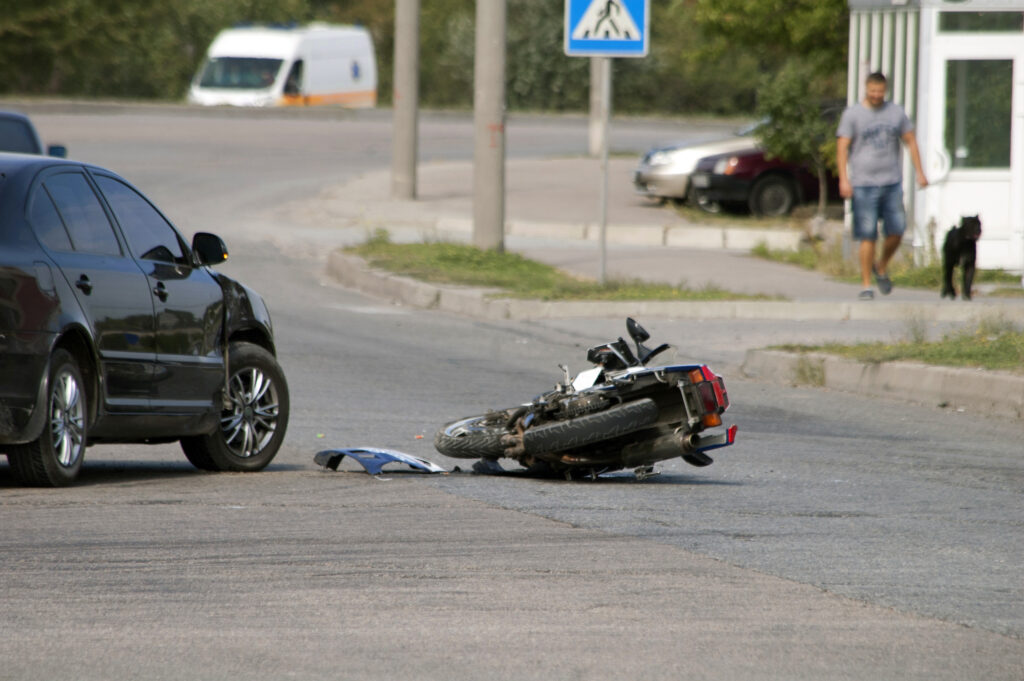
When you’re involved in a motorcycle accident in California, you’re facing more than just physical injuries and property damage – you’re entering a complex legal landscape where insurance companies and opposing attorneys often hold biased assumptions about motorcycle riders. California motorcycle accident claims require specialized knowledge of state-specific laws like lane splitting regulations and mandatory helmet requirements, along with strategies to combat the systematic prejudice that motorcyclists face throughout the claims process.
California’s unique position as the only state where lane splitting is explicitly legal, combined with its mandatory helmet law and comparative negligence system, creates a distinctive framework for motorcycle accident claims. The stakes are particularly high because motorcycle accidents typically result in more severe injuries than car accidents, with fatality rates 28 times higher per mile traveled according to National Highway Traffic Safety Administration data. This means your claim likely involves substantial medical expenses, extended recovery periods, and significant pain and suffering damages.
Understanding your rights and the claims process is crucial because insurance companies often approach motorcycle accident claims with preconceived notions about rider behavior. They may attempt to minimize your compensation by exploiting stereotypes or misapplying California’s motorcycle laws. This guide walks you through everything you need to know about filing and pursuing a successful motorcycle accident claim in California, from immediate post-accident steps through settlement negotiations or trial.
What Are California Motorcycle Accident Claims?
A California motorcycle accident claim is a legal process where an injured motorcyclist or their family seeks compensation from the at-fault party’s insurance company or through the court system. These claims encompass personal injury damages, property damage to your motorcycle, lost wages, medical expenses, and pain and suffering resulting from accidents involving motorcycles on California roads.
Motorcycle accident claims in California operate under the same basic legal principles as car accident claims – they’re typically based on negligence, where you must prove another party’s careless or reckless behavior caused your accident and injuries. However, the practical reality of pursuing these claims differs significantly due to the unique vulnerabilities of motorcycle riders and the biased perceptions they often encounter.
How Motorcycle Claims Differ From Car Accident Claims
The most significant difference lies in injury severity. While car occupants have airbags, crumple zones, and metal frames protecting them, motorcyclists rely primarily on protective gear and defensive riding skills. This vulnerability translates to more serious injuries, longer recovery periods, and higher medical costs – factors that should increase claim values but are often undermined by insurance company bias.
Insurance adjusters and defense attorneys frequently approach motorcycle claims with skepticism, operating under unfounded assumptions that riders are inherently reckless or partially responsible for their injuries. This bias means you need stronger evidence, more thorough documentation, and often more aggressive legal representation to secure fair compensation.
At our firm, we’ve seen insurance companies question perfectly legal riding behaviors like lane splitting or challenge the credibility of motorcyclists based purely on stereotypes. Your claim must be prepared to combat these prejudices with clear evidence and expert testimony about motorcycle safety and rider behavior.
Types of California Motorcycle Accident Claims
California motorcycle accident claims generally fall into four categories. Personal injury claims form the majority, seeking compensation for medical expenses, lost wages, pain and suffering, and permanent disabilities resulting from your injuries. These claims can range from minor road rash and broken bones to catastrophic injuries like spinal cord damage or traumatic brain injuries.
Wrongful death claims become necessary when motorcycle accidents result in fatalities, which unfortunately occur at disproportionately high rates. These claims allow surviving family members to recover economic losses like lost income and benefits, along with non-economic damages for loss of companionship and emotional suffering.
Property damage claims address motorcycle repairs or replacement, along with damaged safety gear and other personal property. While these amounts may seem relatively small, motorcycles and quality protective equipment represent significant investments that deserve full compensation.
California Motorcycle Laws That Affect Your Claim
California’s motorcycle laws create unique factors that can significantly impact your claim’s value and the liability analysis. Understanding these laws is essential because insurance companies and opposing attorneys often misrepresent or misapply them to reduce your compensation.
California Lane Splitting Law and Liability
California stands alone as the only state where lane splitting is explicitly legal under Vehicle Code §21658.1. This law allows motorcycles to pass between lanes of slow-moving or stopped traffic, a practice that can actually improve safety by reducing rear-end collisions and traffic congestion.
The California Highway Patrol has established guidelines recommending that lane splitting occur between the far left lanes at speeds no more than 10 mph faster than surrounding traffic. However, these are guidelines, not legal requirements – the law simply states that lane splitting must be done in a “safe and prudent manner.”
If your accident occurred while lane splitting, insurance companies will often automatically assume you were at fault. This assumption is legally incorrect. Lane splitting is legal behavior, and other drivers have a duty to check for motorcycles before changing lanes. We frequently encounter cases where drivers change lanes without signaling or checking mirrors, then blame the motorcyclist for lane splitting – even when the rider was following all safety guidelines.
California Helmet Law Requirements
Vehicle Code §27803 requires all motorcycle riders and passengers to wear Department of Transportation-approved helmets. This mandatory helmet law affects your claim through California’s comparative negligence system – if you weren’t wearing a helmet, it could reduce your compensation even if another party caused the accident.
However, helmet law violations don’t automatically bar recovery or mean you were primarily at fault for the accident. The violation only matters if it contributed to your specific injuries. For example, if you suffered a broken leg in an accident while not wearing a helmet, the helmet violation shouldn’t reduce your compensation for the leg injury.
Insurance companies often exaggerate the impact of helmet law violations, suggesting that any head injury to an unhelmeted rider eliminates the claim entirely. This is false. California’s comparative negligence law allows partial recovery even when you’ve contributed to your own injuries through violations like not wearing a helmet.
The California Motorcycle Accident Claim Process
Successfully navigating a motorcycle accident claim requires understanding the sequential steps and critical deadlines that govern your case. The process typically spans several months to several years, depending on injury severity and whether settlement negotiations succeed.
Immediate Steps After a California Motorcycle Accident
Your first priority is always medical attention, even if injuries seem minor. Motorcycle accidents frequently cause internal injuries or concussions that aren’t immediately apparent, and delayed medical treatment gives insurance companies ammunition to argue your injuries weren’t serious or weren’t caused by the accident.
Document everything at the accident scene if you’re physically able. Take photos of vehicle positions, road conditions, traffic signals, and any hazards that may have contributed to the accident. Collect contact information from witnesses, as their testimony often proves crucial in overcoming the anti-motorcycle bias you may encounter.
Request that the responding officer document any statements from the other driver about not seeing you or failing to check mirrors. These admissions become powerful evidence, especially in common scenarios like left-turn accidents where drivers claim they never saw the approaching motorcycle.
Filing Your Motorcycle Accident Claim in California
You must file personal injury claims within two years of your accident date under California Code of Civil Procedure §335.1. For wrongful death claims, the deadline is two years from the date of death. These deadlines are absolute – missing them generally eliminates your right to compensation regardless of how strong your case might be.
Begin by notifying all relevant insurance companies about the accident, including the at-fault driver’s insurer and your own motorcycle insurance carrier. However, avoid giving detailed recorded statements until you’ve consulted with an attorney. Insurance adjusters often use these statements to lock you into positions that may not accurately reflect the full extent of your injuries or the circumstances of the accident.
Gathering Evidence for Your Motorcycle Claim
Motorcycle accident claims require specific types of evidence that car accident claims don’t typically need. Document your protective gear, including any damage to helmets, jackets, boots, or gloves. This evidence demonstrates your commitment to safety and can help counter stereotypes about reckless riding behavior.
Preserve your motorcycle in its post-accident condition until an expert can examine it. Mechanical defects, tire conditions, and impact patterns tell important stories about how the accident occurred and can help establish the other party’s fault.
Overcoming Insurance Company Bias Against Motorcyclists
The insurance industry harbors systematic bias against motorcycle riders, viewing them as risk-taking individuals who bear inherent responsibility for their accidents. This prejudice manifests throughout the claims process and requires proactive strategies to ensure fair treatment.
Common Insurance Company Tactics Against Motorcycle Riders
Insurance adjusters often begin investigations with the assumption that motorcyclists were speeding, lane splitting aggressively, or engaging in other risky behaviors. They may focus disproportionately on minor traffic violations while downplaying clear evidence of the other driver’s negligence.
We’ve seen adjusters argue that experienced riders should have been able to avoid accidents that were clearly caused by other drivers’ failures to yield right-of-way or check blind spots. This “blame the victim” mentality ignores the fundamental principle that defensive riding skills don’t eliminate other parties’ duty to drive safely.
Insurance companies may also minimize injury severity by suggesting that motorcyclists “know the risks” and therefore deserve reduced compensation. This argument has no legal basis – choosing to ride a motorcycle doesn’t diminish your right to full compensation when another party’s negligence causes your injuries.
How to Protect Yourself From Discriminatory Practices
Professional presentation becomes crucial in overcoming bias. Dress conservatively for depositions, medical evaluations, and any face-to-face interactions with insurance representatives. While this shouldn’t be necessary, the reality is that appearance affects perceptions, and your claim’s value may suffer if adjusters can’t see past motorcyclist stereotypes.
Document your riding experience, safety training, and commitment to protective gear. Completion of motorcycle safety courses, years of accident-free riding, and investment in high-quality safety equipment help establish you as a responsible rider rather than a reckless thrill-seeker.
California Motorcycle Accident Settlement Amounts
Motorcycle accident settlements in California typically exceed car accident settlements due to the severity of injuries commonly sustained by riders. However, achieving fair compensation requires understanding the factors that influence settlement values and the insurance company tactics designed to minimize payouts.
Factors That Determine Your Settlement Value
Medical expenses form the foundation of most motorcycle accident settlements, often reaching six or seven figures in cases involving spinal cord injuries, traumatic brain injuries, or multiple surgeries. California allows recovery of all reasonable medical expenses related to your accident, including future care requirements projected by medical experts.
Lost wages calculations become complex in motorcycle accident cases because injuries often require extended recovery periods or result in permanent disabilities that affect earning capacity. High-earning professionals may lose hundreds of thousands of dollars in income, while service industry workers may face job loss due to physical limitations.
Pain and suffering damages recognize the unique trauma of motorcycle accidents – the terror of being thrown from your bike, the vulnerability of lying injured on the road, and the psychological impact of severe injuries. California has no cap on pain and suffering damages in motorcycle accident cases, allowing juries to award compensation that truly reflects your experience.
Motorcycle Wrongful Death Compensation in California
Wrongful death claims provide compensation to surviving family members when motorcycle accidents result in fatalities. These claims typically yield substantial settlements because they must account for the deceased’s entire future earning capacity along with the family’s emotional losses.
Economic damages include lost wages, benefits, and household services the deceased would have provided throughout their expected lifetime. Non-economic damages compensate for loss of companionship, guidance, and the emotional support that family members will never receive.
Finding the Right California Motorcycle Accident Lawyer
The unique challenges of motorcycle accident claims require attorneys who understand both the legal complexities and the bias issues that riders face. Not all personal injury lawyers have experience handling the specific problems that arise in motorcycle cases.
Questions to Ask Potential Motorcycle Accident Attorneys
Ask specifically about their experience with motorcycle accident cases and their understanding of lane splitting laws, helmet requirements, and the insurance industry’s anti-rider bias. Attorneys who primarily handle car accidents may not appreciate the specialized knowledge required for motorcycle cases.
Inquire about their trial experience with motorcycle cases. Insurance companies often take harder positions against motorcycle claims, knowing that some attorneys prefer to settle rather than face potentially biased juries. Your attorney should be prepared to take your case to trial if necessary to achieve fair compensation.
Understanding Motorcycle Accident Lawyer Fees
Most California motorcycle accident attorneys work on contingency fees, typically ranging from 33% to 40% of your settlement or verdict. This arrangement allows you to pursue your claim without upfront legal fees, with your attorney only getting paid if they recover compensation for you.
The contingency fee structure aligns your attorney’s interests with yours – they’re motivated to achieve the highest possible settlement because their fee depends on your recovery. However, discuss fee arrangements clearly upfront, including how costs for expert witnesses, medical record retrieval, and other expenses will be handled.
Common Questions About California Motorcycle Accident Claims
Understanding the answers to frequently asked questions can help you make informed decisions about your claim and set realistic expectations for the process ahead.
Can I Still Recover Compensation if I Wasn’t Wearing a Helmet?
Yes, you can still recover compensation even if you violated California’s helmet law. The helmet violation may reduce your compensation through comparative negligence principles, but it doesn’t eliminate your claim entirely. The reduction only applies to injuries that the helmet might have prevented or reduced.
We’ve successfully recovered substantial compensation for clients who weren’t wearing helmets when their injuries were clearly unrelated to head trauma. For example, if you suffered broken bones or internal injuries in an accident while not wearing a helmet, the helmet violation shouldn’t affect compensation for those specific injuries.
How Long Do California Motorcycle Accident Claims Take?
Simple motorcycle accident claims with clear liability and minor injuries may settle within 6-12 months. However, serious injury cases often take 18-36 months to resolve, especially if surgery and extended rehabilitation are required to determine the full extent of your recovery.
Cases that proceed to trial can take several years to conclude. While this timeline may seem daunting, it’s often necessary to achieve fair compensation for severe injuries. Insurance companies count on injured riders accepting quick, low settlements rather than waiting for full recovery and proper case development.
What if the Other Driver Claims I Was Lane Splitting Illegally?
Lane splitting is legal in California, so the mere fact that you were lane splitting doesn’t establish fault. The question becomes whether you were lane splitting in a “safe and prudent manner” as required by law. This requires analysis of traffic speed, lane positioning, visibility conditions, and the other driver’s actions leading to the collision.
Even if your lane splitting was questionable, it doesn’t automatically make you liable for the accident. The other driver still had a duty to check mirrors and signal before changing lanes. Many lane splitting accidents result from drivers changing lanes without warning, making them primarily responsible regardless of the motorcycle’s lane splitting behavior.
—
Get Expert Help With Your California Motorcycle Accident Claim
Navigating a motorcycle accident claim in California requires specialized knowledge of state laws, insurance company tactics, and the unique challenges that motorcyclists face throughout the legal process. From understanding lane splitting liability to combating anti-rider bias, these cases demand attorneys who appreciate the complexities involved and are prepared to fight for fair compensation.
At our firm, we’ve dedicated our practice to protecting the rights of California motorcyclists and their families. We understand the devastating impact of motorcycle accidents and the uphill battle you face against insurance companies that often view riders with suspicion and prejudice. Our team has extensive experience with California’s motorcycle laws, successful trial results in motorcycle cases, and the specialized knowledge required to build compelling cases that overcome bias and achieve maximum compensation. Don’t let insurance companies take advantage of your situation.