
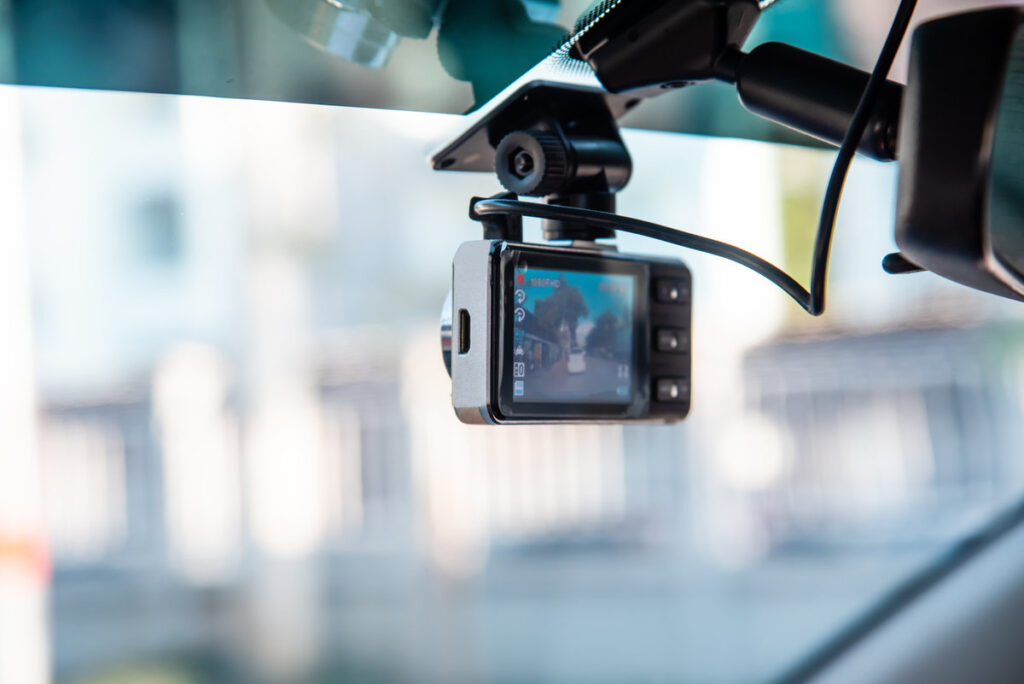
Yes, dash cam footage can absolutely be used as evidence in California car accident cases. In fact, dash cam video often provides the most powerful and objective evidence available to prove fault and liability in vehicle collisions. California courts routinely admit properly authenticated dash cam footage under the state’s Evidence Code, making it one of the most valuable tools for resolving disputes about what really happened during an accident.
Dash cam footage eliminates the “he-said-she-said” disputes that plague many car accident cases. Unlike witness testimony, which can be unreliable or biased, video evidence shows exactly what occurred at the moment of impact. This objective documentation often makes the difference between a successful insurance claim and a denied one, or between a fair settlement and a lengthy court battle.
Why Dash Cam Footage is So Valuable in California Accident Cases
When you’re involved in a car accident, memories fade and stories change, but video evidence remains constant. Dash cam footage provides an unbiased record of exactly what happened before, during, and after a collision.
Your dash cam captures critical details that human witnesses often miss or misremember. The video shows who ran the red light, who changed lanes without signaling, who was speeding, and who actually caused the accident. It records the exact time of the collision, weather conditions, road hazards, and even post-accident statements made by drivers at the scene.
Insurance companies know that clear dash cam footage is nearly impossible to dispute. When your video clearly shows the other driver’s negligence, insurance adjusters typically settle claims faster and for higher amounts rather than fight obviously losing battles in court.
What Types of Dash Cam Evidence California Courts Accept
California courts admit dash cam footage under the state’s Evidence Code sections 1400-1402, which govern authentication of evidence. The video must be properly authenticated, relevant to the case, and have a proper foundation established through testimony.
Your dash cam footage is generally admissible if someone can testify that it accurately represents what happened. This could be you, a passenger, or even an expert witness who analyzed the video. The court needs to know that the footage hasn’t been altered and that it truly depicts the accident scene.
Different types of dash cam systems provide varying levels of evidence:
Single forward-facing cameras capture your driving perspective and show what’s happening in front of your vehicle. These are most common and highly effective for proving fault in head-on collisions, intersection accidents, and rear-end crashes where you’re the victim.
Dual camera systems with front and rear recording provide comprehensive coverage. The rear camera is particularly valuable for documenting rear-end collisions and showing when other drivers are following too closely or driving aggressively behind you.
Commercial fleet cameras with GPS tracking and driver-facing capabilities offer the most complete documentation. These systems record vehicle speed, exact location, and sometimes include audio of conversations inside the vehicle.
Critical Steps to Preserve Your Dash Cam Evidence
Download your footage immediately after any accident – this cannot be overstated. Most dash cams use loop recording, which means they continuously record over old footage when the memory card becomes full. If you wait too long, your accident footage may be permanently overwritten.
Make multiple copies of your video file right away. Save it to your computer, upload it to cloud storage, and email a copy to yourself. Keep the original SD card in a safe place, as you’ll need it to establish a proper chain of custody if the case goes to court.
At [our firm], we’ve seen countless cases where critical dash cam evidence was lost because drivers didn’t understand how their camera’s loop recording worked. Don’t let this happen to you – preserve your footage first, then worry about everything else.
Never delete dash cam footage, even if you think it might hurt your case. Destroying evidence can result in severe legal consequences called “spoliation sanctions,” including monetary penalties or even dismissal of your case.
Understanding California’s Privacy Laws and Dash Cams
California has strict privacy laws, including Penal Code Section 632 requiring two-party consent for audio recordings. However, dash cams are generally legal to use because they typically record in public areas where people don’t have a reasonable expectation of privacy.
Most dash cam audio recording is permissible because it occurs in vehicles on public roads. The law recognizes that conversations in cars on public streets aren’t private communications. Still, it’s wise to inform passengers that your dash cam records audio to avoid any potential issues.
Visual recording with dash cams faces fewer legal restrictions than audio recording. You’re generally free to record video of public roadways, other vehicles, and traffic situations without special consent requirements.
How Insurance Companies Use Dash Cam Footage
Insurance companies actively seek dash cam footage from accident scenes because video evidence helps them determine fault quickly and accurately. When you have clear footage showing the other driver caused the accident, insurers often settle claims promptly rather than risk losing in court.
However, insurance companies will also use dash cam footage against you if it shows you were partially at fault. California follows a “comparative negligence” system, meaning your compensation can be reduced if you bear some responsibility for the accident.
Be strategic about sharing your footage. Consult with an experienced attorney before providing video evidence to insurance companies, as they may try to use minor traffic infractions shown in your video to reduce their liability – even when the other driver clearly caused the main accident.
What Dash Cam Footage Can and Cannot Prove
Your dash cam footage excels at documenting objective facts about the accident: vehicle positions, traffic signal compliance, speed differentials, road conditions, and the actual moment of impact. It provides timestamp evidence and shows the sequence of events leading to the collision.
However, dash cam footage has limitations. The camera angle might not capture everything relevant to your case. Video quality can be poor in low light or bad weather conditions. The footage might not show the other driver’s level of impairment or distraction, and it typically can’t capture what’s happening inside other vehicles.
Expert analysis can enhance your dash cam footage’s value significantly. Accident reconstruction specialists can perform frame-by-frame analysis to calculate vehicle speeds, measure stopping distances, and create detailed timelines of events.
Purchasing Recommendations for Maximum Legal Protection
Invest in front AND rear cameras for comprehensive protection. A quality dual-camera system typically costs $200-$500 and provides much better evidence than single-camera setups.
Look for these essential features:
- 1080p resolution minimum (1440p or 4K better for reading license plates)
- GPS capability for speed and location data
- Parking mode to record hit-and-run incidents when you’re away
- Loop recording with impact detection to preserve accident footage
- Cloud backup to prevent evidence loss if your camera is damaged
Reliable brands include Garmin, Nextbase, BlackVue, and Thinkware. Expect to spend $150-$300 for a quality single camera or $250-$500 for a good dual-camera system.
Get Professional Legal Help with Your Dash Cam Evidence
Having dash cam footage from your accident is incredibly valuable, but knowing how to use it effectively in your legal case requires expertise. California’s evidence rules are complex, and insurance companies have teams of lawyers working to minimize their payouts – even when you have video proof of their insured’s negligence.
At our firm, we’ve successfully used dash cam footage to secure substantial settlements and verdicts for our clients throughout California. We understand how to properly authenticate video evidence, work with expert witnesses to enhance footage analysis, and leverage compelling video proof to maximize your compensation. Our experienced team knows exactly how insurance companies try to discredit or minimize dash cam evidence, and we’re prepared to fight those tactics aggressively. Call us today at +1 1184 4457 44 or contact our office online for a free consultation about your car accident case.
Disclaimer: This article provides general educational information about dash cam evidence in California and is not intended as legal advice. Every case is unique, and you should consult with a qualified California personal injury attorney for advice specific to your situation.