
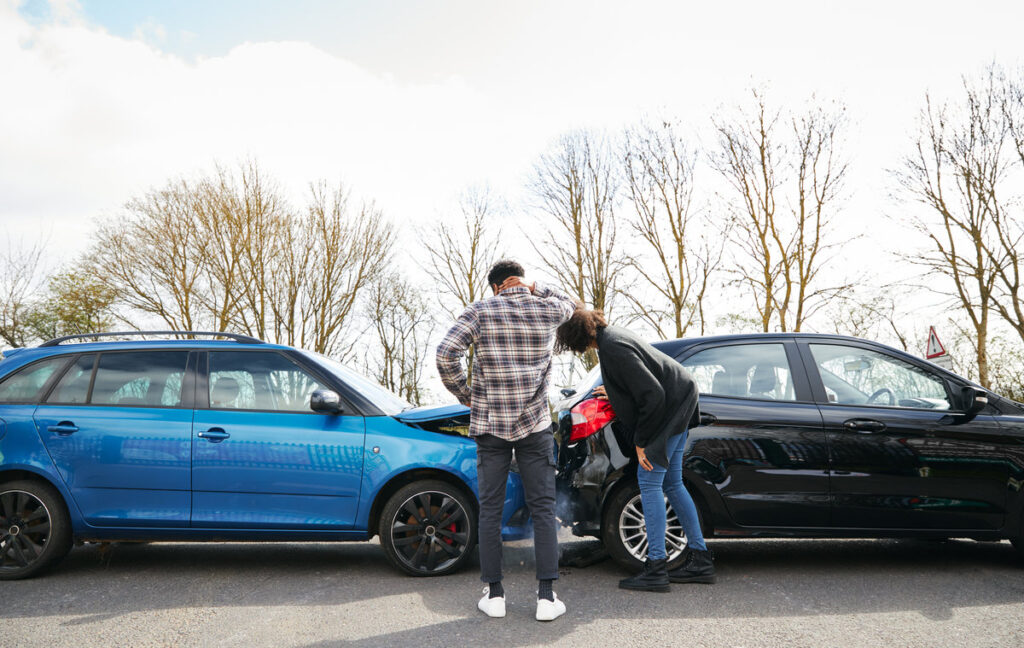
Getting hit by an uninsured driver in California can feel overwhelming and unfair – you’re dealing with injuries and vehicle damage because someone else broke the law by driving without insurance. While California requires all drivers to carry liability insurance, approximately 15-20% of drivers on the road are uninsured, and another 10-15% carry insufficient coverage. This means roughly one in four California drivers either has no insurance or inadequate protection when they cause accidents.
The good news is that you have several options for recovery, with uninsured motorist (UM) and underinsured motorist (UIM) coverage being your primary protection. We’ll walk you through everything you need to know about recovering after being hit by an uninsured driver in California, from immediate steps to take through the claims process and legal options.
What to Do Immediately After Being Hit by an Uninsured Driver
Your actions immediately after the accident can significantly impact your ability to recover compensation later. Here’s what you need to do right away.
Essential Steps at the Accident Scene
First, ensure everyone’s safety and call 911 if anyone is injured. Even if injuries seem minor, getting a police report is crucial for your uninsured motorist claim. Exchange information with the other driver, including their name, driver’s license number, vehicle information, and ask to see their insurance card.
Document everything you can at the scene. Take photos of vehicle damage, the accident scene, license plates, and any visible injuries. Get contact information from witnesses – their statements can be valuable if the other driver disputes fault or if you discover they’re uninsured.
Don’t admit fault or discuss the details of the accident beyond basic facts with the other driver. Save detailed discussions for the police officer writing the report.
Documenting the Accident for Your Claim
Thorough documentation is essential for both police reports and insurance claims. Write down exactly what happened while the details are fresh in your memory. Note the time, weather conditions, traffic signals, and any factors that contributed to the accident.
If you suspect the other driver might be uninsured – perhaps they seem nervous about providing insurance information or their insurance card looks suspicious – document these observations. Take photos of any insurance documents they provide.
Reporting Requirements in California
California law requires you to report accidents involving injuries or property damage over $1,000 to the Department of Motor Vehicles within 10 days using form SR-1. You must also report the accident to your insurance company promptly, even if you’re not sure you’ll file a claim.
Contact your insurance company as soon as possible after the accident. Many policies require prompt notification, and delays could jeopardize your coverage.
Understanding Uninsured vs Underinsured Drivers in California
Not all drivers without adequate insurance fall into the same category under California law. Understanding these distinctions helps determine which coverage applies to your situation.
What Makes a Driver “Uninsured” Under California Law
Under California Insurance Code §11580.2, a driver is considered “uninsured” if they have no liability insurance coverage, their insurance company denies coverage, their insurer is insolvent, or they’re driving a stolen vehicle. Hit-and-run drivers are also treated as uninsured for insurance purposes.
This also includes drivers whose insurance policies have lapsed due to non-payment or drivers who are specifically excluded from coverage (like unlisted teenage drivers).
Underinsured Driver Scenarios
An underinsured driver has liability insurance, but their coverage limits are insufficient to fully compensate you for your damages. For example, if you have $100,000 in medical bills but the at-fault driver only carries California’s minimum liability coverage of $15,000, they’re considered underinsured by $85,000.
California’s minimum liability requirements ($15,000 per person, $30,000 per accident for bodily injury) are woefully inadequate for serious injuries, making underinsured claims common.
Hit-and-Run and Phantom Vehicle Accidents
Hit-and-run accidents where the driver is never identified are treated as uninsured driver accidents. Your UM coverage will apply, but you’ll need a police report filed within 24 hours.
“Phantom vehicle” claims involve vehicles that cause accidents without making physical contact – like a car that forces you to swerve and crash. These claims are more challenging because many policies require either physical contact or an independent witness to verify the phantom vehicle’s involvement.
Your Uninsured Motorist Coverage: The Primary Solution
Uninsured motorist coverage is your best protection against financial loss when hit by an uninsured driver. This coverage is part of your own auto insurance policy and provides compensation when the at-fault driver has no insurance or insufficient coverage.
How UM/UIM Coverage Works in California
When you’re hit by an uninsured driver, you file a claim with your own insurance company under your UM coverage. Your insurer steps into the shoes of the at-fault driver and compensates you for medical expenses, lost wages, pain and suffering, and other damages – up to your policy limits.
At King Law Group, we often see clients surprised to learn they’re filing a claim with their own insurance company rather than the at-fault driver’s insurer. This is normal and doesn’t affect your rates since you weren’t at fault.
California’s UM/UIM Coverage Requirements
California law requires all auto insurance companies to offer UM/UIM coverage to their customers. The coverage must be offered in amounts equal to your liability coverage limits unless you specifically reject it in writing. Oral rejections are invalid – the rejection must be on a specific written form.
If you don’t sign a written rejection, you automatically have UM/UIM coverage equal to your liability limits. Many Californians unknowingly have this protection without realizing it.
What If You Don’t Have UM/UIM Coverage?
If you signed a written waiver rejecting UM/UIM coverage, your options are severely limited. You can sue the uninsured driver directly, but collecting money from someone who couldn’t afford insurance is extremely difficult. Most uninsured drivers are “judgment-proof,” meaning they have few assets to seize even if you win a lawsuit.
You may have other coverage like MedPay (medical payments coverage) that can help with immediate medical expenses, and your health insurance should cover medical treatment.
Filing an Uninsured Motorist Claim with Your Insurance
The UM/UIM claims process is similar to filing a third-party liability claim, except you’re dealing with your own insurance company.
The UM/UIM Claims Process Step-by-Step
Start by notifying your insurance company about the accident and that you believe the other driver is uninsured. Your insurer will verify the other driver’s insurance status and assign a claims adjuster to investigate your claim.
The investigation includes confirming the other driver lacks adequate insurance, determining fault for the accident, and evaluating your damages. Your insurer may require you to attend an Independent Medical Examination (IME) to assess your injuries.
Required Documentation and Evidence
You’ll need to provide the police report, medical records and bills, proof of lost wages, and evidence that the other driver was uninsured. Keep detailed records of all medical treatment, therapy sessions, and how your injuries affect your daily activities.
Your insurer may request a recorded statement about the accident. While you have a duty to cooperate with your own insurance company, consider consulting with an attorney before giving detailed recorded statements about fault or the extent of your injuries.
Dealing with Insurance Adjusters and Settlements
Remember that even though it’s your own insurance company, the adjuster’s job is to settle your claim for as little as possible. Document all communications and don’t accept the first settlement offer without carefully evaluating whether it fully compensates you for your damages.
At King Law Group, we help clients understand the true value of their claims and negotiate fair settlements with their own insurance companies. Your UM/UIM coverage should provide the same compensation you’d receive from an at-fault driver with adequate insurance.
When Arbitration Becomes Necessary
If you can’t reach a fair settlement with your insurance company, most UM/UIM policies require binding arbitration rather than allowing you to sue your insurer. An independent arbitrator reviews the evidence and makes a binding decision about your claim’s value.
Arbitration can be expensive (often $5,000-$10,000 in arbitrator fees split between parties) and complex, making attorney representation advisable for significant claims.
When to Sue an Uninsured Driver Directly
While suing an uninsured driver is possible, it’s important to have realistic expectations about your chances of actually collecting money.
Realistic Expectations About Collecting Money
The harsh reality is that most uninsured drivers have no assets to collect against. If they couldn’t afford car insurance, they likely can’t afford to pay a large judgment. Even if you win your lawsuit, collection can be nearly impossible.
California’s wage garnishment laws protect minimum wage earners and limit garnishments to 25% of disposable income. Many uninsured drivers work for cash, are unemployed, or file bankruptcy to discharge court judgments.
The Lawsuit Process in California
You have two years from the accident date to file a personal injury lawsuit in California. The process involves filing a complaint, serving the defendant, discovery (exchanging information), and potentially going to trial.
Even winning a judgment doesn’t guarantee payment. You’ll need to locate the defendant’s assets and use collection methods like wage garnishment or bank levies, which are often unsuccessful.
Methods for Collecting Your Judgment
Judgment collection methods include wage garnishment (if they’re employed), bank account levies, property liens, and asset seizure. However, California law protects many assets from collection, and most uninsured drivers have little to seize.
Consider whether the time and expense of a lawsuit (often $10,000-$50,000+ in attorney fees and costs) is worth the unlikely chance of collection.
California Laws and Penalties for Uninsured Drivers
Understanding why so many California drivers lack insurance helps explain the scope of this problem.
California Insurance Code Requirements
California Vehicle Code §16020 requires all drivers to carry minimum liability insurance of $15,000 per person and $30,000 per accident for bodily injury, plus $5,000 for property damage. Driving without insurance is illegal and carries significant penalties.
Despite these requirements, enforcement is limited, and many drivers continue driving without insurance even after being caught.
DMV Penalties and License Suspension
The DMV can suspend the registration and driving privileges of uninsured drivers. However, many continue driving with suspended licenses, creating an ongoing public safety problem.
Penalties include fines up to $200 for first offenses and vehicle impoundment for repeat violations. Unfortunately, these penalties often don’t deter drivers who can’t afford insurance from continuing to drive.
Additional Resources and Government Assistance
When insurance coverage is insufficient, some additional resources may help with medical expenses and other costs.
Medical Coverage Options
Your health insurance should cover medical treatment regardless of the accident circumstances. If you have MedPay coverage on your auto policy, it pays medical expenses immediately without waiting for fault determination.
California’s Medi-Cal program may provide emergency medical coverage for low-income accident victims, even without prior enrollment.
California Victim Compensation Programs
The California Victim Compensation Board provides limited assistance for victims of violent crimes, which may include DUI accidents. However, most traffic accidents don’t qualify for these programs unless they involve criminal conduct.
When to Contact a Personal injury Attorney
Consider consulting an attorney if you have significant injuries, disputes with your insurance company about coverage or claim value, or questions about whether the other driver actually was uninsured. Many personal injury attorneys offer free consultations for uninsured driver accident cases.
Get Help With Your California Uninsured Driver Claim
Being hit by an uninsured driver in California is frustrating, but you’re not without options. Uninsured motorist coverage through your own insurance policy is typically your best path to compensation, providing protection that many Californians have without realizing it. While suing the uninsured driver directly is possible, it’s rarely successful due to collectability issues.
At California Car Accidents Lawyer, we help California accident victims navigate uninsured motorist claims and fight for fair compensation when their own insurance companies try to minimize settlements. Our experienced personal injury attorneys understand California’s complex UM/UIM laws and can help you recover the full compensation you deserve after being hit by an uninsured driver. Contact us today at +1 1184 4457 44 for a free consultation about your uninsured driver accident claim.